
REMOTE CLEAN TRUCK CHECK
Continuously connected devices for Clean Truck Check.
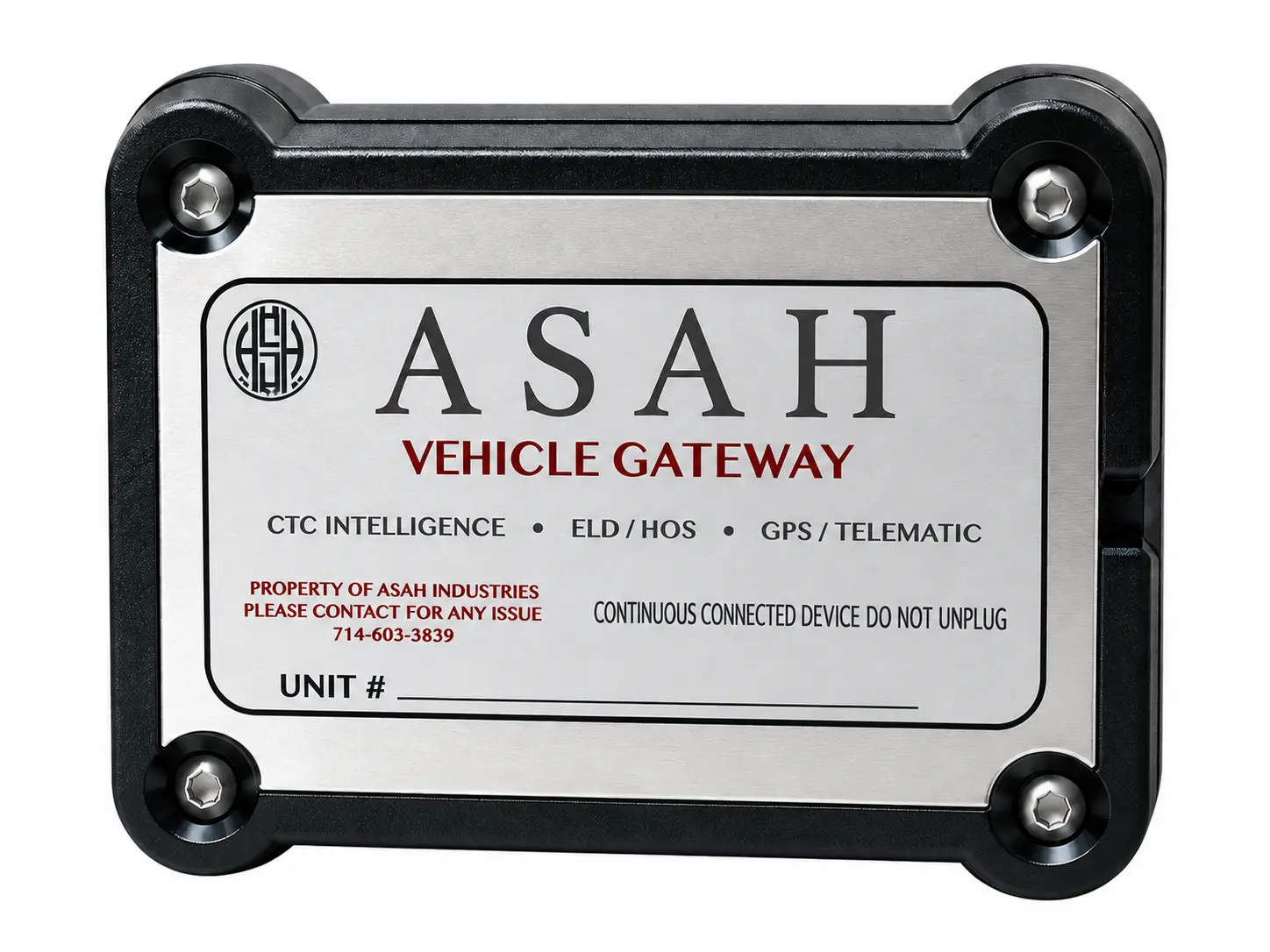
Keep an eligible truck connected for remote California Clean Truck Check OBD testing. ASAH Vehicle Gateway works with CTC Intelligence to support testing and give your team a shared view of vehicle status and test history.
What is a continuously connected device?
For Clean Truck Check, CARB distinguishes continuously connected devices from scan tools used for individual testing visits. A continuously connected device is assigned to one vehicle for ongoing OBD testing. This is the category often described as a Clean Truck Check telematics device. Review CARB’s device categories and certified-device list.
ASAH Vehicle Gateway is the vehicle-assigned hardware used with the CTC Intelligence service. Eligible remote testing can reduce testing appointments and trips while keeping results accessible to your team.
How does remote testing fit your fleet?
- Review each truck. Confirm engine model year, fuel type, diagnostic connection, and existing equipment.
- Connect and activate. Use the vehicle-specific installation instructions and confirm the gateway is assigned to the correct vehicle.
- Follow results. Review vehicle and testing information in CTC Intelligence, and confirm official compliance requirements and deadlines in CTC-VIS.
For a truck that qualifies, this can reduce the coordination involved in repeated OBD testing visits. It does not eliminate repairs, owner reporting, annual CARB fees, or other required inspections.
Start with the engine, not just the truck year.
CARB requires OBD testing for 2013-and-newer diesel engines and 2018-and-newer alternative-fuel engines. Engine model year can differ from vehicle model year. Non-OBD vehicles follow different inspection requirements, so a diagnostic connector alone does not establish eligibility. Check CARB’s testing requirements.
What AVG and CTC Intelligence do.
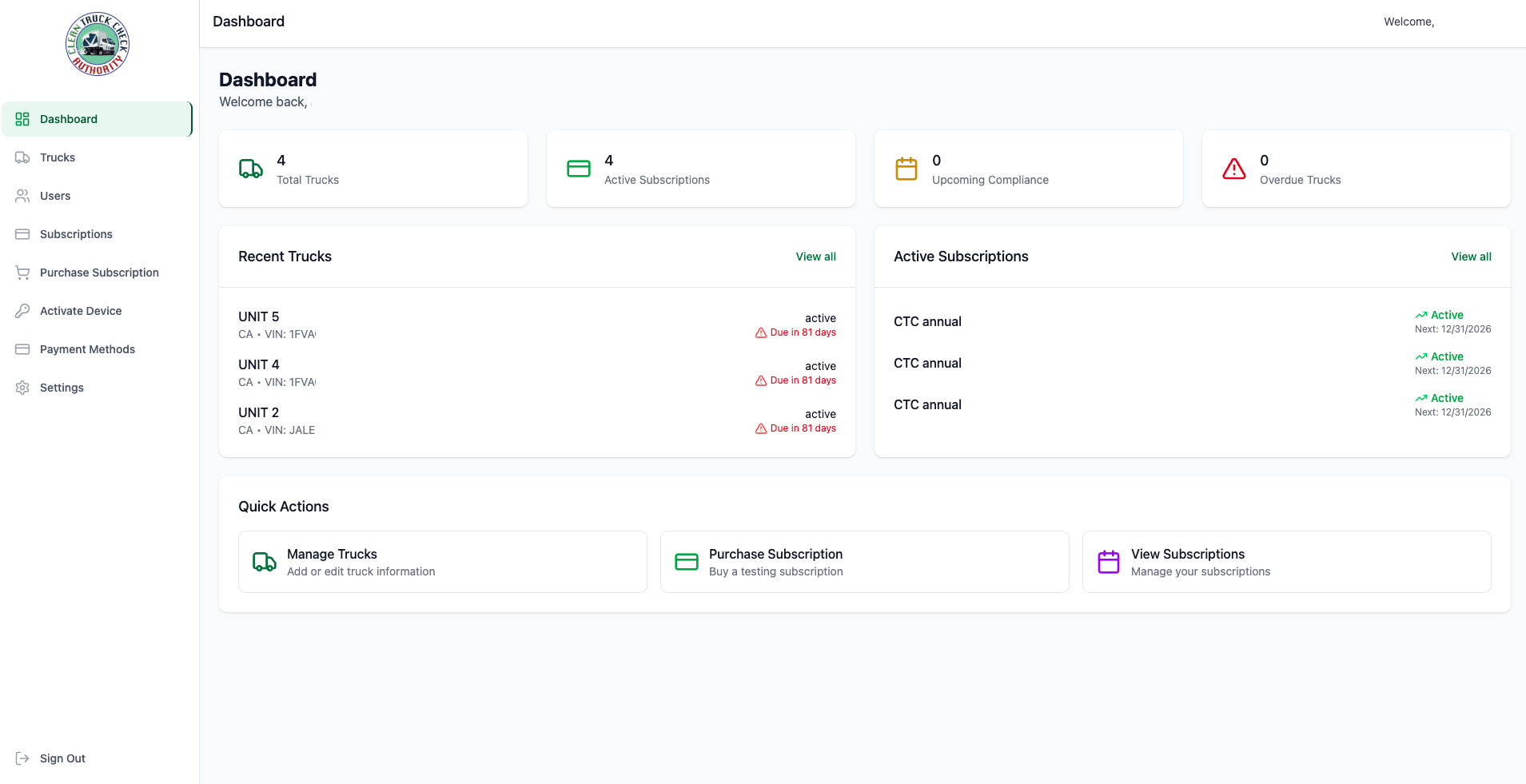
ASAH Vehicle Gateway is the hardware assigned to your vehicle. CTC Intelligence is the service and portal. Together, they collect eligible OBD data, support qualifying Clean Truck Check test submissions, and bring testing and connection information into your account.
For a fleet manager, the practical workflow is to review the vehicles, confirm the connection, and use the portal to follow results and items needing attention. A connected status is not, by itself, confirmation that every compliance obligation is complete.
What the annual plan covers.
The current commercial offer is $300 per eligible vehicle per year for fleets of 1–15 vehicles. It includes gateway use during the active subscription, eligible testing attempts under plan terms, and access to fleet and test-history information. For more than 15 trucks, ask whether a fleet discount may be available. Pricing is reviewed individually and a discount is not guaranteed.
Confirm shipping, installation, taxes, and other charges before purchase. Gateway use under this service is not a standalone hardware purchase. The offer does not include GPS tracking, ELD/HOS service, required repairs, CARB fees, or separate opacity and visual inspections.
Compare a full year of quarterly testing.
CARB’s four-times-per-year schedule for applicable OBD-equipped vehicles begins October 1, 2027. Qualifying agricultural vehicles and non-commercial motorhomes retain annual schedules. Follow the dates in CTC-VIS. Read CARB’s testing-frequency fact sheet.
- At $150 per test: four tests cost $600. Compared with the current $300 annual service, potential testing-cost savings are $300 per truck for a full year at four tests.
- At $100 per test: four tests cost $400. The same comparison shows potential savings of $100 per truck.
These are examples using the stated test prices, not a market-average claim or a guarantee. They compare a full year at four tests, not all of calendar 2027. Figures exclude CARB fees, repairs, taxes, shipping, installation and any other charges; fleet quotes and provider prices may differ.
Eligible remote OBD testing can also reduce staff time spent arranging appointments, coordinating drivers and taking trucks to testing locations. Those potential labor and travel savings are not included in the dollar examples; actual time saved varies by operation.
Keep your owner responsibilities in view.
CARB’s compliance requirements include reporting vehicles in CTC-VIS, paying the applicable annual fee, submitting passing tests, and resolving outstanding enforcement violations. Your CTC-VIS record is the place to confirm deadlines. Read CARB’s overview.
Before enrolling, gather engine years, fuel types, vehicle counts, and information about any existing ELD. Our team can review the fit before you plan the rollout.
What should you confirm before enrollment?
Check the exact device model and its certification with our team. CARB notes that reseller branding can differ from the manufacturer on its certified-device list; the device identifier is what links the hardware to its certification. Read CARB’s guidance for resold devices.
If an ELD already uses the diagnostic port, review the connection before installation. A telematics device used for Clean Truck Check does not automatically include ELD/HOS or GPS services. Read our installation and compatibility guide.
Based outside California? Start with the trucks that actually operate in the state. Plan Clean Truck Check for an out-of-state fleet.